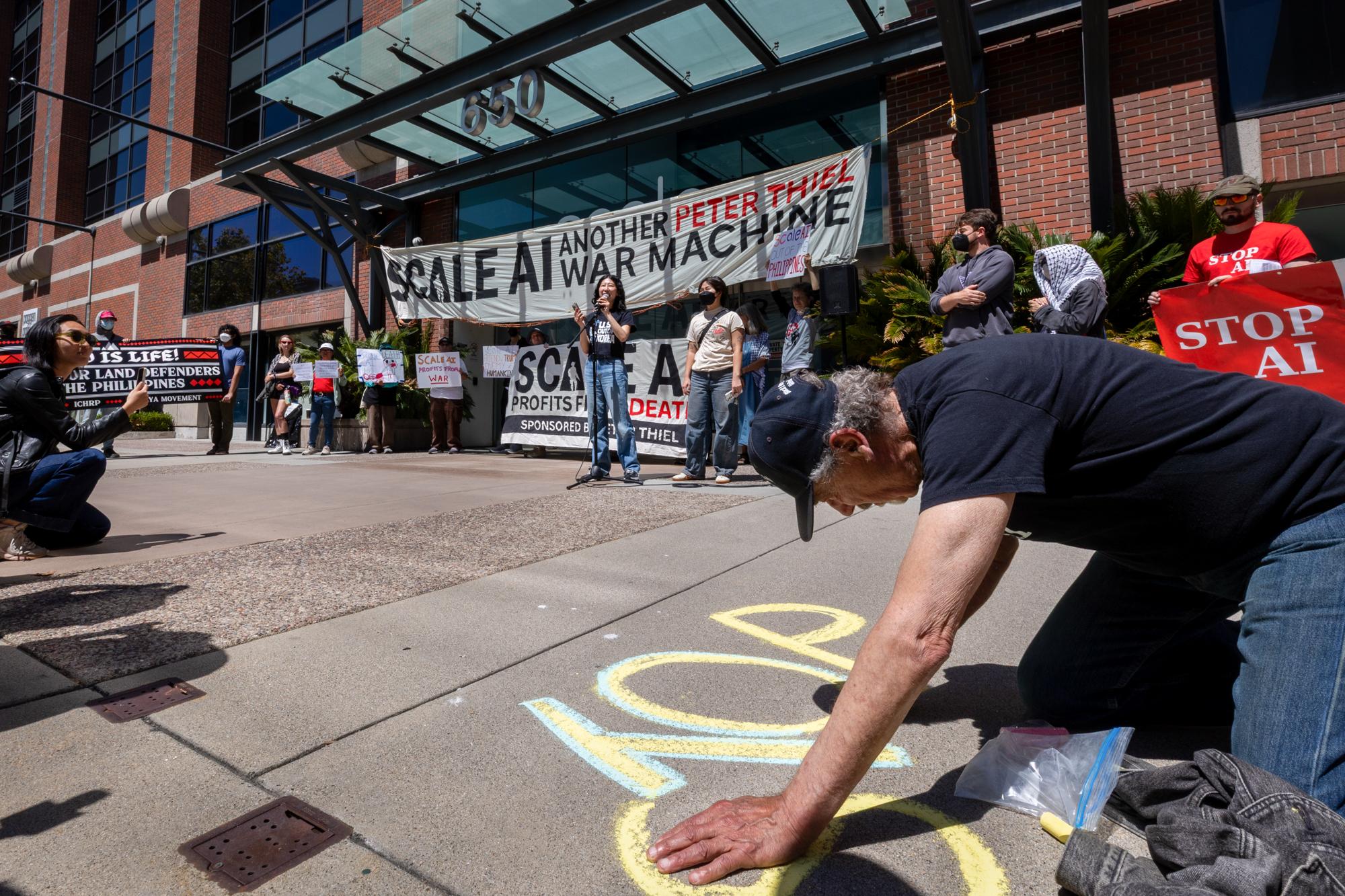
Activists Rally Against Military Use of AI at Scale AI Headquarters
Mass Demonstration Demands Ethical AI Practices and Transparency
In a significant show of dissent, hundreds of activists assembled outside Scale AI’s San Francisco headquarters to protest the company’s involvement in military-related artificial intelligence projects. The demonstrators, organized by a coalition of advocacy groups, called for a halt to the weaponization of AI technologies, emphasizing the urgent need for ethical oversight and transparency. Participants carried banners emblazoned with slogans like “Stop AI Arms Race” and “Human Rights Before Profits”, underscoring their demand for stricter regulations and corporate accountability.
Speakers at the event, including technology ethicists, former AI developers, and human rights advocates, highlighted the moral dilemmas posed by integrating AI into autonomous weapons systems. They warned that without proper checks, such developments could exacerbate global instability and lead to unintended escalations in armed conflicts.
Key demands presented by the protesters included:
- Establishment of independent ethics committees within AI firms to oversee military-related projects.
- Full public disclosure of contracts between AI companies and defense agencies.
- Legislative action to ban or severely limit the use of AI in lethal autonomous weaponry.
Below is a comparative overview of AI companies’ ethical policies and military collaborations, as highlighted by the activists:
| Company | Ethical Oversight | Military Partnerships | Transparency Level |
|---|---|---|---|
| Scale AI | Minimal | Confirmed Contracts | Moderate |
| Anthropic | Robust | None | High |
| Google DeepMind | Moderate | Limited | Moderate |
| IBM Watson | Extensive | Minimal | High |
Military AI Raises Ethical and Civil Liberties Concerns
The protestors voiced deep apprehension about the consequences of deploying AI in military contexts, particularly autonomous weapon systems capable of making lethal decisions without human intervention. They cautioned that such technologies could inadvertently trigger conflicts or escalate existing tensions worldwide.
Beyond the battlefield, activists warned about the broader societal impact of militarized AI, including the potential for increased surveillance and erosion of privacy rights. Technologies initially designed for defense purposes often find their way into civilian applications, raising alarms about mass data collection and automated decision-making infringing on civil liberties.
The coalition outlined several urgent measures to address these risks:
- Temporary ban on AI weapon development until comprehensive international regulations are enacted.
- Independent evaluations of AI systems used by defense contractors to ensure ethical compliance.
- Transparency mandates requiring disclosure of AI applications and their potential effects on civilian populations.
- Inclusive stakeholder dialogues involving technologists, ethicists, policymakers, and affected communities.
Calls for Clear Governance and Accountability in AI Development
Amid rising concerns, experts and activists are advocating for transparent governance structures to oversee AI’s integration into military and civilian spheres. They stress that without stringent oversight, the rapid militarization of AI could undermine global security and fundamental human rights.
Transparency proponents urge open communication between AI developers, government regulators, and the public to foster trust and accountability. They emphasize that companies like Scale AI must openly share information about their defense collaborations and the ethical frameworks guiding their work.
Highlighted proposals include:
- Mandatory impact assessments for AI projects with potential military applications.
- Public access to data on AI’s use in surveillance and autonomous weaponry.
- International agreements to regulate the development and deployment of AI arms.
- Independent audits to verify adherence to ethical standards.
| Stakeholder | Primary Concern | Key Demand |
|---|---|---|
| AI Scientists | Algorithmic Transparency | Open-source model evaluations |
| Human Rights Organizations | Ethical Deployment | Ban on lethal autonomous weapons |
| Legislators | Regulatory Frameworks | Clear legal guidelines |
| Activist Groups | Public Engagement | Awareness and education campaigns |
Increasing Pressure for Industry Transparency and Government Regulation
As the debate intensifies, calls for accountability within the AI industry and stronger government oversight are gaining momentum. Protesters at Scale AI’s headquarters stressed the critical need for transparent reporting and ethical safeguards to prevent misuse of AI technologies in military contexts.
Advocates propose several measures to ensure responsible AI innovation, including:
- Regular transparency reports detailing AI capabilities and military applications.
- Independent ethical audits to evaluate compliance with established standards.
- Public forums to involve civil society in shaping AI policy decisions.
Government officials are increasingly exploring legislative options to regulate AI’s military use, aiming to balance technological progress with national security and ethical considerations. The following table summarizes key regulatory initiatives under discussion:
| Policy Initiative | Description | Current Status |
|---|---|---|
| Risk Assessment Standards | Comprehensive evaluation protocols for AI systems before deployment | In Review |
| Export Restrictions | Controls on international sales of military AI technologies | Proposed |
| Ethics Certification Programs | Mandatory accreditation for AI products used in defense sectors | Under Discussion |
Looking Ahead: The Future of AI in Defense and Society
The recent protest at Scale AI’s headquarters reflects a growing public unease about the militarization of artificial intelligence and its broader societal implications. As AI technologies become increasingly intertwined with national security, the demand for transparency, ethical governance, and regulatory oversight is intensifying.
The outcomes of ongoing debates and policy developments will significantly influence how AI is integrated into both military operations and civilian life. Stakeholders across sectors must collaborate to ensure that AI advancements promote safety, respect human rights, and prevent unintended harm.
Our coverage will continue to track these developments, providing updates on activism, legislative progress, and industry responses to this critical issue.